
Simple, not shallow: Reaching children with the gospel

Charles Spurgeon once said, “Begin early to teach, for children begin early to sin.” This giant of the pulpit, who preached the Word of God to thousands of people each week, was also known for his heart for instructing children in the Biblical gospel. For Mr Spurgeon, ministering the gospel to a child was just as important as sharing the good news with an adult.
I doubt many within the wider evangelical scene would argue against such views. We know that children’s ministry is vital, but there is debate about how best to go about such an important endeavour.
My concern is that we often underestimate children and, in an effort to be relevant and fun, we dumb down the gospel and end up losing Biblical truth. If you had to take medicine, you wouldn’t water it down, because by doing so it would lose its curative properties. Likewise, when we come to children, we need to make sure we don’t water down the Biblical gospel. Instead of teaching the truth, we can end up proclaiming a message that is so weakened that very little, if any, saving truth remains.
Sharing the gospel with children
Over the years, I have had many opportunities to share the gospel with children. This has been in church settings, evangelistic events, and school meetings. In each context, we want to be sensitive to the level of understanding the children have, but at the same time we must be careful not to lose the message in an effort to be “relevant”. In an attempt to be “fun”, we can sometimes lower the seriousness of our message so that children view it as nothing more than another piece of entertainment.
Within our Sunday schools, we sometimes face another danger: the danger of assuming the gospel. As a result, we end up teaching only Bible stories and moralism, which may be helpful in shaping a child to live a good life, but moralism and stories won’t keep them out of Hell.
Of course, I am not arguing for some form of children’s ministry where we make the children sit in neat rows while we simply preach to them in the same manner as we would to an adult audience. I certainly believe we should tailor our messages to be age-appropriate, but as we do so, we need to be careful not to lose the curative properties of the gospel.
To quote Mr Spurgeon again, “Be sure, whatever you leave out, that you teach the children the three R’s – Ruin, Redemption, and Regeneration.”
We must tell children about the reality of their own sin, the work of Jesus on the cross, and the life and forgiveness He gives to all those who repent and trust in Him. We cannot assume for a moment that a child doesn’t need to hear these truths. We must share them in a way they can grasp, while at the same time not watering down the message.
Once, I attended a small-group Bible study led by an elder from an evangelical church. During the study, the topic of child evangelism came up. He stated, “We certainly don’t want to teach our children that they’re sinners, as that’ll make them feel bad and doubt their salvation.” This is exactly the problem we face. Many children are told by the world that they are wonderful, brilliant, and good enough for Heaven, and then they go along to church or attend a children’s meeting without hearing the Biblical truth. We are not being loving towards young people if we hold back the truth of the gospel.
Again, we should share in an age-appropriate manner. We present truth in a way they can understand, but we must tell the truth. If we truly love children, we mustn’t simply teach them moralism, Bible stories, or focus on fun – we must tell them of the loving Saviour who calls little children to Himself (Matthew 19:14).
A way forward
Over the past 18 months, I’ve been thinking a great deal about child evangelism, especially since, in our open-air meetings, we are encountering more families who want their children to learn the truth.
The question we faced was how to share the good news faithfully. Sadly, much of the material on the market either didn’t clearly present the gospel or was aimed at church children, so this forced us to consider what would be best.
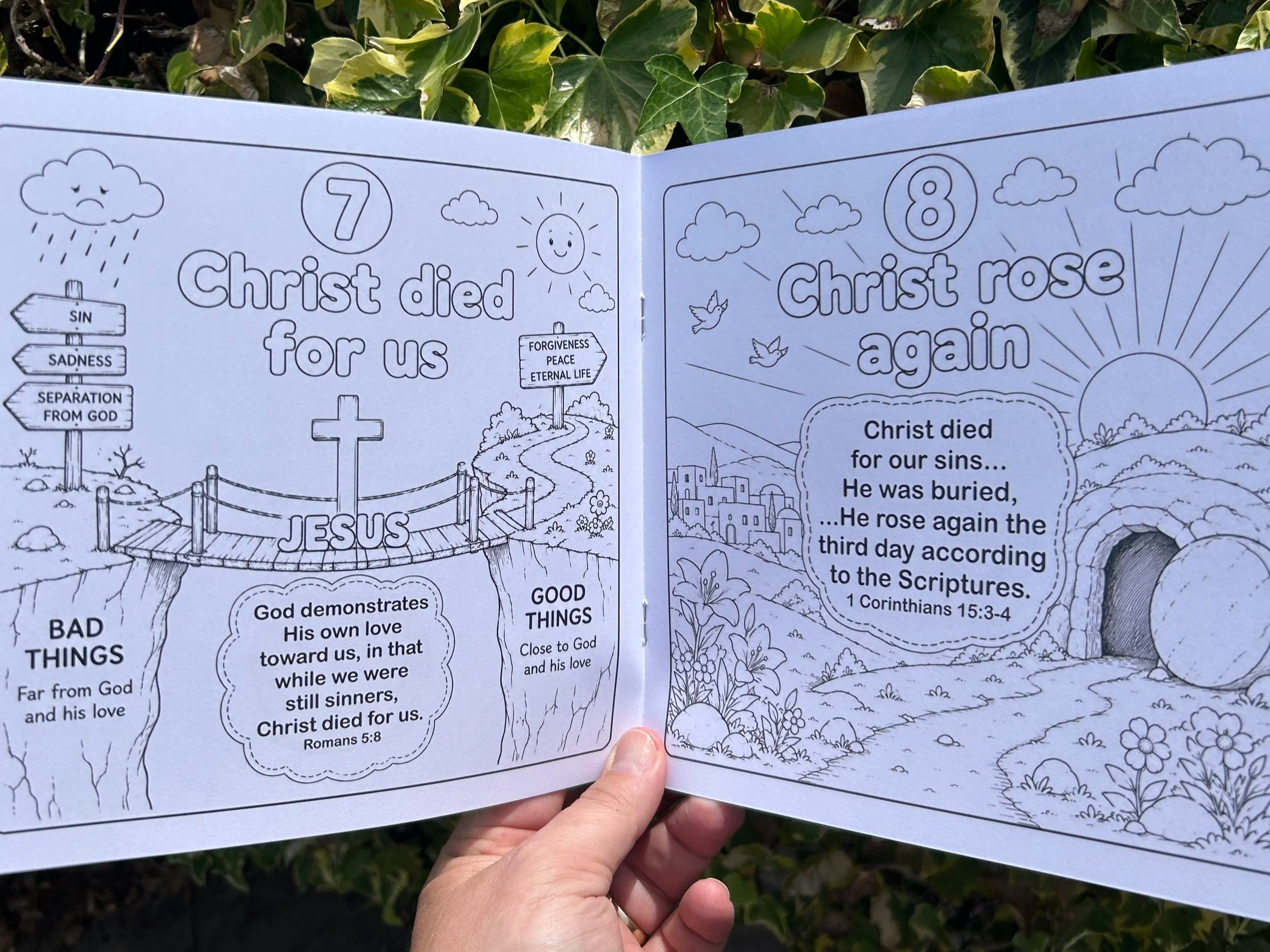
Over the following months, we developed a gospel colouring book for children. The book goes through ten key Bible verses (with plenty of pictures) before presenting a clear, easy-to-understand, age-appropriate explanation of the gospel. Since using this colouring book, we have received lots of positive feedback from both non-Christian and Christian parents. Our goal wasn’t to dumb down the message, but to present it clearly and in an engaging manner.
Inside the colouring book
I would certainly encourage all parents, church leaders, evangelists, missionaries, and others involved in children’s ministry to consider how they can best communicate the gospel to children. If you’d like to see what we’ve produced, you can request a free colouring book from Printing Evangelism (UK only) at www.printing-evangelism.com.
To give Mr Spurgeon the final word, “Do not leave your children to wander out without the guardianship of holy knowledge, for there are seducers abroad who will mislead them if they can.”
____